
Fall 2026 Courses
Student Hours
MAT 133: Calculus II
(Fall 2026)
- Welcome to the course webpage for MAT 133: Calculus II at Grinnell College.
Course Info
- MAT 133: Calculus II
- Fall 2026
- Sec 01MWF 8:00–9:20 AMSec 05MWF 1:10–2:30 PM
- Noyce 2243 (both sections)
- 4 Credits
Instructor Info
- Dr. Jadyn V. Breland (he/him/his)
- M/W2:45–4:00 PMTu10:00 AM–12:00 PM
- Noyce 2516 · drop in, no appointment
Syllabus
The syllabus can be found here.
Welcome to the Fall 2026 iteration of MAT 133 at Grinnell College! This is the sequel to MAT 131; we will focus on extending the ideas of derivatives and integrals to functions of more than one variable. This syllabus is specific to Sections 01 and 05 of the course. If you are one of my students, I highly recommend you read the document in its entirety. Additional information about the course can be found on the course webpage.
Textbook Calculus, 9th edition, James Stewart (ISBN-13: 978-1-337-61392-7). Required. I will assign reading from the textbook for most class meetings, and I strongly encourage you to keep up with it consistently. The e-Book can be accessed via the Canvas WebAssign module. You can also access WebAssign by clicking this link. If you have trouble accessing the text, please talk to me as soon as possible.
Course Webpage The course web page is located here. Most of the course content will be posted here, including: this syllabus, due dates, notes, and other resources.
WebAssign Homework will be assigned and administered through WebAssign. You should be able to access it via the Canvas WebAssign module. You must have access to it; the courseware is bundled with the textbook listed above. If you have trouble getting access, please talk to me.
Canvas The Canvas webpage will be used minimally for hosting grades, accessing WebAssign, and making announcements.
Gradescope We will use Gradescope for the submission of some assignments and for grading exams. You will receive a notification via email once you've been added to the course.
The Math Lab The Math Lab (Noyce 2012) offers drop-in and ongoing tutoring for our course, along with space to study and work in groups.
Accessibility I am committed to making my course accessible. If you encounter materials that are not accessible to you, or experience a barrier to your participation, please bring it to my attention and I will work with you.
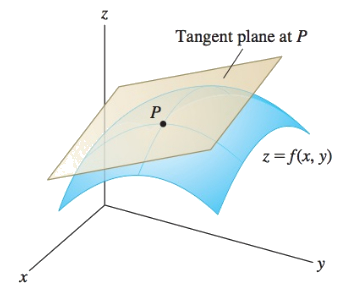
Course Topics Parametric curves and their derivatives. The geometry of 3-space: lines, planes, and their intersections. Vectors, the dot product, and orthogonality. Partial derivatives of functions $z = f(x,y)$ and their higher-dimensional analogs. The chain rule, gradient, and directional derivative. Graphs of surfaces $z = f(x,y)$, level curves, and their relation to orthogonality. Optimization in higher dimensions, including Lagrange multipliers. Riemann sums for functions of several variables. Double and triple integrals, with a review of single-variable integration techniques. Volumes of regions defined by inequalities. More information about this course and the mathematics curriculum is available in Grinnell's advising guide.
Learning Outcomes Upon successful completion of the course, students will be able to do the following within the topic of multivariable calculus:
- Recall the basic definitions, theorems, and techniques, and choose an appropriate method when approaching a problem.
- Apply geometric reasoning to inform computations, and vice-versa.
- Judge whether a claim is true, and support that judgment with clear reasoning.
- Communicate their ideas in clear, convincing, and concise language.
- Work well with a diverse group of classmates.
In addition, students will further develop as independent, self-directed learners with the confidence to explore unfamiliar problems and ideas.
Assessment Distribution Your final score in the course will be calculated as the weighted average of the following assessments (all values are percentages). Descriptions of each type of assessment can be found below.
| Assessment | % | Assessment | % |
|---|---|---|---|
| Preview Activities | 10 | Midterm 1 | 15 |
| Engagement | 5 | Midterm 2 | 15 |
| Quizzes | 5 | Midterm 3 | 15 |
| Homework (WebAssign) | 5 | Final Exam | 30 |
| Total | 100 | ||
Letter Grades Your final letter grade depends on your final score. Final letter grades are assigned according to the following score ranges:
| A | 93–100 |
| A− | 90–92 |
| B+ | 86–89 |
| B | 83–85 |
| B− | 80–82 |
| C+ | 76–79 |
| C | 73–75 |
| C− | 70–72 |
| D | 60–69 |
| F | 0–59 |
Your final score will be rounded to the nearest whole number before this table is applied; for example, a score of $89.5$ becomes $90$ and earns an A−, while a score of $89.4$ becomes $89$ and earns a B+. Score ranges may be adjusted in your favor according to class performance.
Preview Activities are short assignments meant to prepare you to participate actively in class by introducing the day's central idea. They will consist of an activity, reading certain parts of the textbook, and some reflection questions.
There will be at most one Preview Activity for each class meeting, posted on the course webpage approximately two days before it is due. You will submit a write-up of your attempt at the activity together with your responses to the reflection questions via Gradescope, by 11:59 p.m. the night before the meeting it precedes. Because a Preview Activity serves no purpose once that class has happened, late submissions cannot be accepted; your lowest four scores are dropped instead.
Each Preview Activity is graded Pass (1 point) or No Pass (0 points). You earn a Pass by submitting on time, making a good faith attempt at the activity, and answering each reflection question.
A significant portion of class time will be reserved for actively doing calculus, usually in small groups and often at the board. You begin the semester with full engagement credit, and you keep it by doing the things that sustain a productive learning environment, such as:
- attending class meetings consistently;
- participating in class and group discussions; and
- working the activities during the time set aside for them.
Behaviors that may negatively affect your engagement grade include missing more than two class meetings, frequently arriving late, not engaging in class or group discussions, and regularly doing something else during class.
There will be approximately ten short quizzes given in class over the course of the semester. Each will take about ten minutes and will ask you to use an idea we developed together in a recent class meeting. No calculators, notes, or other outside materials are allowed. Quiz dates will be announced in class and posted on the course webpage at least one class meeting in advance. Your lowest two scores will be dropped; there will be no makeup quizzes.
General Information. There will be 10 homework sets, assigned through WebAssign and due on Fridays at 11:59 p.m., beginning September 4. They are roughly weekly, with none due during fall break, over Thanksgiving, or during the week of an exam. Each assignment will be posted at least a week before it is due; if it is less than a week out and an assignment has not appeared, please email me.
Expectations. The WebAssign exercises are practice doing mathematics: the more problems you do, the more proficient you will become. You are allowed and encouraged to work together on homework. However, each student is expected to turn in their own work, and you should make sure that you can recreate the solution from scratch, without your notes, the way you would on an exam. Reproducing someone else's work without understanding it defeats the purpose.
Extensions. Homework deadlines are for your benefit. If you need more time on a particular assignment, email me before the deadline and I will extend it. The new due date will be Monday of the following week at 11:59 p.m.
There will be three in-class midterm exams, given during our regular class meeting on the following dates:
| Midterm Number | Midterm Date |
|---|---|
| Midterm 1 | Friday, September 25 |
| Midterm 2 | Friday, October 16 |
| Midterm 3 | Wednesday, November 25 |
Midterms are not comprehensive. I will let you know in advance which topics will be covered on each midterm. You will have the entire class to work on the exam.
The final exam is cumulative and covers everything we do this semester. It is scheduled by the Registrar according to your section's meeting time, so the two sections sit the exam at different hours on the same day:
| Section Number | Final Exam Date |
|---|---|
| Section 01 (MWF 8:00–9:20) | Wednesday, December 16, 2:00–5:00 p.m. |
| Section 05 (MWF 1:10–2:30) | Wednesday, December 16, 9:00 a.m.–12:00 p.m. |
College policy does not permit either of us to change this schedule without the Registrar's approval, so please plan your December travel accordingly.
Exam Policies Exams are timed and will be administered during class. You will have the entire period to work. Exams are closed-book and closed-notes. No calculators or other outside resources are permitted.
Missed exams. Alternate and make-up exams are given only in extreme circumstances, as determined by me, and must be adequately documented and brought to my attention as soon as possible. If you miss an exam without having arranged an alternate in advance, and the absence does not meet that standard, you will receive a zero.
Regrade requests. Regrade requests must be made through Gradescope within one week of the exam being returned. You must explain specifically what you believe was scored incorrectly and why. I will regrade the entire problem, not only the part you identify.
Academic Honesty All students must adhere to Grinnell's academic honesty policy which can be found here.
Collaboration. You are allowed and encouraged to work together on homework and Preview Activities, but the work you submit must be your own. If you do collaborate, you must indicate this on your submission. You can do this on WebAssign via the Show Your Work feature. Similarly, if you received help from a tutor at the Math Lab, you should indicate this.
Outside Resources. You may consult other resources, such as other textbooks, notes, or video lectures, for the purpose of expanding your understanding of the material. You may also use graphing software such as GeoGebra or Desmos when working on assignments.
On the other hand, you are not allowed to:
- consult any source for the purpose of finding partial or full solutions to an assigned problem;
- post problems online to seek help on forums such as Chegg, Course Hero, or Math StackExchange;
- prompt an LLM such as ChatGPT or Claude, or a computer algebra system such as Mathematica or WolframAlpha, to produce any part of a solution to any assigned or graded problem, unless I have specifically instructed you to.
It is my belief that the behaviors listed above interfere with the learning process and will negatively affect your understanding of the material and your growth as a learner.
Use of Generative AI Use of generative AI (such as ChatGPT, Claude, or Gemini) is permitted as a learning and study aid in this course, provided that your use is consistent with Grinnell's Academic Honesty policy and with the restrictions above. If you use one of these tools while working on something you submit, you must cite it the same way you would cite a classmate or a textbook. Failing to cite a source you used is itself a violation of the honesty policy.
Please be aware that Large Language Models such as ChatGPT are known to provide confident, fluent, and yet completely incorrect information. As someone still learning the material, you may not yet have the knowledge and reasoning skills to tell the difference. I believe that permitted use of AI (such as asking for hints, feedback, or explanation) may unintentionally bypass valuable parts of the learning process, even when the output is correct. I leave it to you to make your best judgment on the use of AI in your learning.
Workload This is a 4-credit course. Grinnell expects that a 4-credit course involves about twelve hours of work per week in total. If you are consistently spending much more than that, please come talk to me.
Accessibility and Disability Resources Grinnell College makes reasonable accommodations for students with documented disabilities. Students with disabilities partner with Accessibility and Disability Resources (ADR) to make academic accommodation letters available to faculty via the accommodation portal. If you have not already worked with the Office of Disability Resources and believe you may require academic accommodations for this course, Disability Resources staff can be reached via e-mail at access@grinnell.edu, by making an appointment via the accommodation portal, or by stopping by Steiner Hall.
Religious Observance I encourage students who plan to observe holy days/times that coincide with class meetings or assignment due dates to consult with me in the first three weeks of classes so that we may reach a mutual understanding of how you can meet the terms of your religious observance and also the requirements for this course.
Academic Support If you have other needs not addressed above, please let me know soon so that we can work together for the best possible learning environment. In some cases, I will recommend consulting with the Academic Success Center (ASC). They are an excellent resource for developing strategies for your learning, and they can connect you with other resources. If I notice that you are encountering difficulty, and I have reached out to you and not received a response, or if you have missed multiple class sessions or are not meeting our class objectives repeatedly, I will submit an academic alert via the ASC's SAL portal. A message notifying you of my concern will get sent to you, along with the ASC staff and your adviser(s), so that they can reach out to you with additional offers of support.
Title IX and Pregnancy-Related Conditions Grinnell College is committed to providing learning, living, and working environments free from discrimination and harassment. For this reason, it is important to report if you or someone you know is experiencing any form of sexual harassment. Your professor is responsible to pass reports made to them to the Title IX Coordinator. If you want to make a report to a confidential resource, your professor can direct you to those spaces.
If you are a pregnant student, have pregnancy-related conditions, or are a parenting student who wishes to request reasonable related supportive measures from the College under Title IX, please email the Title IX Coordinator at titleix@grinnell.edu. The Title IX Coordinator will work with Disability Resources and your professors to provide reasonable supportive measures in support of your education while pregnant or as a parent.
| Grinnell Math | Noyce 2516 | |
|
© 2026 Jadyn V. Breland · Last updated August 2026 Views expressed are my own and do not necessarily reflect those of Grinnell College. |
||